Long before Cape Town existed, this was just a bay.
Table Bay had been known to Portuguese
sailors since the late 1400s, but it was the Dutch who
decided to do something permanent with it.
The VOC Arrives
A vegetable garden with walls around it
The Dutch East India Company (VOC), at the
time the most powerful trading corporation in the world,
controlled the spice trade between Europe and Asia. Their
ships took months to make the journey, and sailors were dying
of scurvy on the way. They needed a
halfway house where ships could stop for
fresh water, fruit, and food. Table Bay was the perfect spot.
In April 1652, a Dutch official named
Jan van Riebeeck arrived with three small
ships and orders to build a fort, plant a
vegetable garden, and keep a
supply station running for passing VOC
ships. That was it. He
wasn’t sent to conquer Africa - he was sent to
run a vegetable garden with walls around it.
Fort de Goede Hoop
A soggy mud box at the edge of the world
The first thing he built, Fort de Goede Hoop, was a
simple square fort made of mud, clay, and timber. Cape
winters are wet and fierce. The walls melted. Workers
repaired them. The walls melted again. This structure was
completely inadequate.
For fourteen years, this soggy mud box was the entire
European presence at the southern tip of Africa. Something
better was clearly needed - and a war in Europe would
provide the excuse to build it. The reason had nothing to do
with the Cape itself.
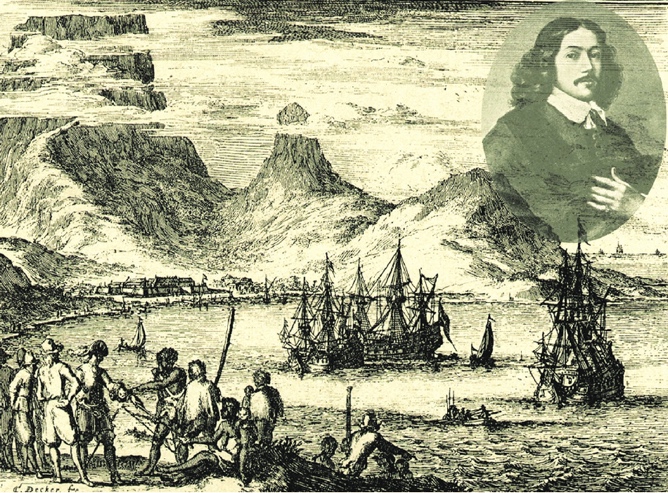
An early engraving of Table Bay with VOC ships, and a portrait of Jan van Riebeeck
Human Story: Jan van Riebeeck’s Impossible Garden
Diaries of a worried man
Van Riebeeck was ordered to produce fresh vegetables for
passing ships, but he arrived at the Cape in autumn, had no
farming infrastructure, no established supply chains, and a
workforce of sailors rather than farmers. His personal
diaries record growing anxiety as he tried to establish
gardens, trade with the local Khoekhoe people for cattle, and
keep his small settlement from falling apart.
He even proposed building a canal and hedge of bitter almonds
to keep the Khoekhoe away from the settlement. Part of it
survives today in Kirstenbosch Botanical Gardens.
He stayed at the Cape for a decade, never entirely happy
there, and left in 1662 without ever seeing the stone fort
that would replace his crumbling creation.
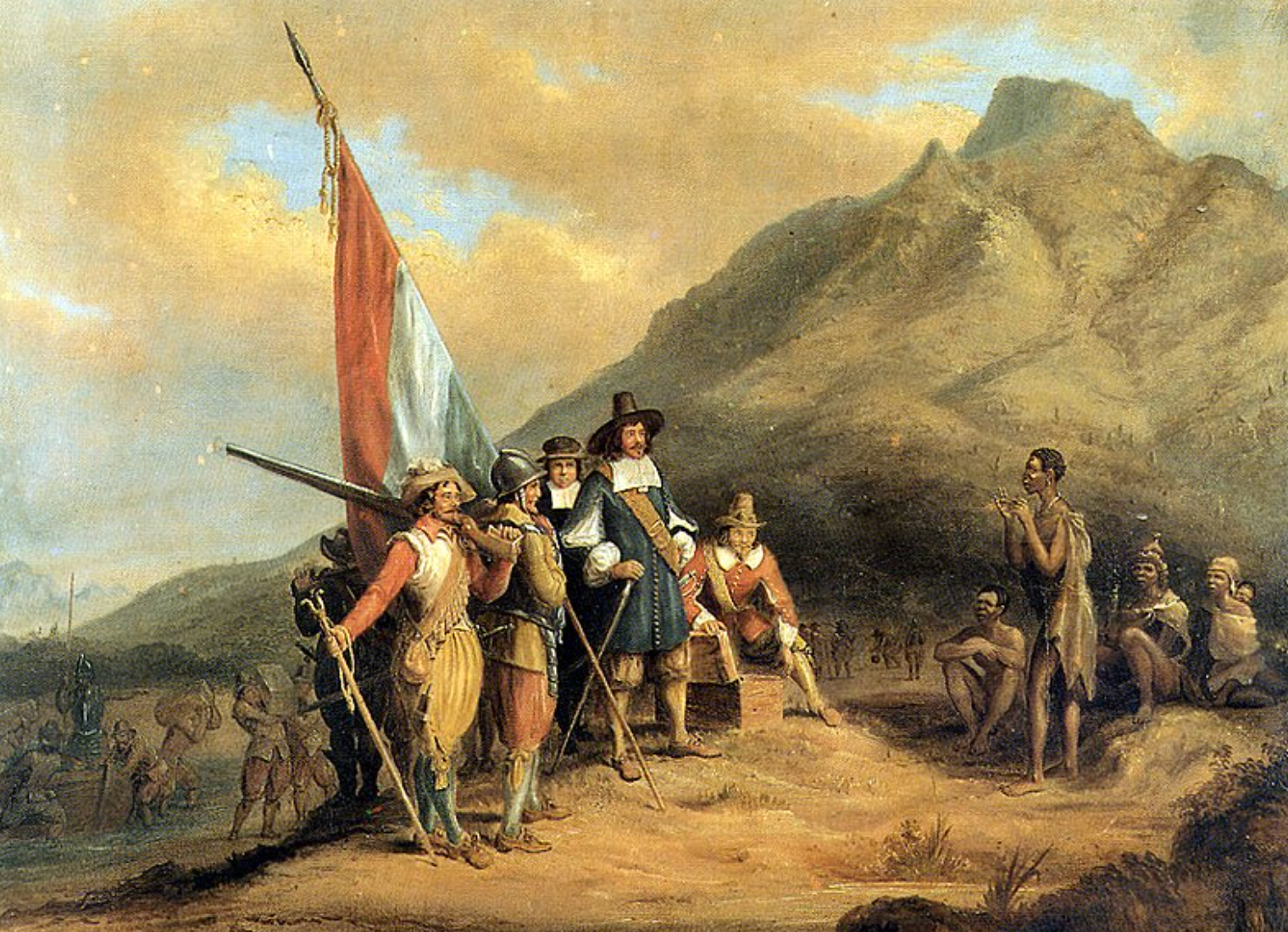
The Landing of Jan van Riebeeck at the Cape, 1652 (Charles Bell)