Curious Facts From the Castle’s Three Centuries In Existence
History is made from large forces - trade, war, empire,
politics. But it is remembered through stories. Here are
some of the Castle’s most memorable details.
1
The Coast Moved. The Castle Didn’t.
The Castle was originally built right on the
edge of the sea. Today it sits about a
kilometre inland - not because the Castle moved, but because
Cape Town reclaimed land from the ocean in the 1930s and
1940s.
The coast moved. The Castle didn’t.
2
Never Taken by Direct Assault
The Castle has flown six different flags
and has never been taken by direct assault. Every single
time it changed hands, the fighting had already happened
somewhere else. Its walls were never truly tested.
3
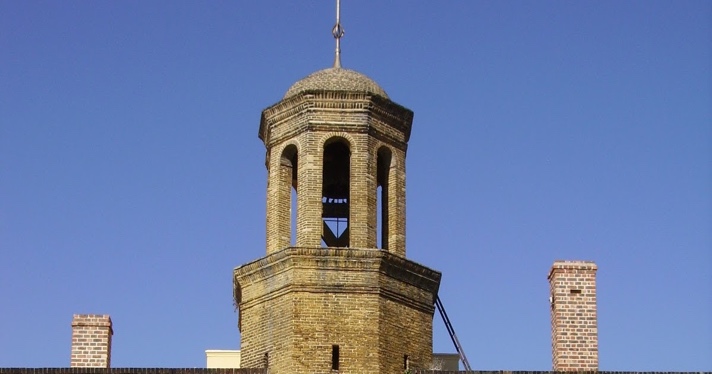
The Oldest Functioning Bell in South Africa
The bell in the Castle’s tower was
cast in Amsterdam in 1697. It weighs 300 kilograms and has
been ringing ever since. This makes it the oldest
functioning bell in South Africa. It has been ringing
longer than the United States has been a country.
The Castle’s bell tower - ringing since 16974
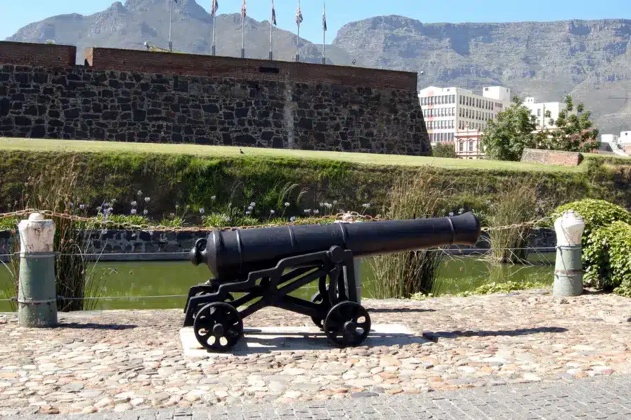
The Spider That Fired the Noon Gun Early
In 1895, the Castle’s signal cannon
(the Noon Gun), fired daily to allow ships in the harbour
to set their chronometers as a tradition since 1806, fired
90 minutes early - at 10:30 instead of noon. The
investigation found the culprit: a spider had crawled into
the electrical relay and triggered the firing mechanism.
Central Cape Town was not pleased.
The Castle’s signal cannon - daily timekeeper of the harbour5
The Rammer That Killed a Horse
During another firing, the rammer (the rod used to push the
powder charge into the cannon barrel) was accidentally left
inside when the cannon was fired. It flew across a portion
of Cape Town and killed a horse.
6
The Donker Gat in Winter
The Donker Gat (Dark Hole) dungeon flooded
in winter. Prisoners chained to the walls sometimes could
not reach higher ground. Some drowned. It was used for the
most significant prisoners - the people the authorities
most wanted silenced.
7
The Curse of Governor Van Noodt
Governor Van Noodt sentenced seven
soldiers to death in 1729. One cursed him from the
gallows. Van Noodt was found dead in his chair the same
day. The cause was never established. His ghost, according
to legend, still walks the battlements.
8
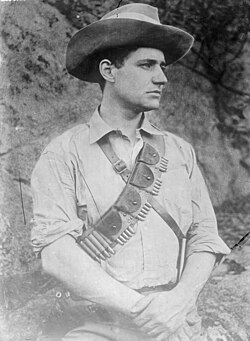
Fritz Duquesne and the Iron Spoon
Fritz Duquesne, a Boer prisoner held in
the Castle during the Anglo-Boer War, spent months
tunnelling through the Castle’s cement walls with an
iron spoon. A falling stone trapped him in his own tunnel
before he could finish. He survived, escaped by other
means, and became an international spy. He was featured in
a series of real-world espionage stories.
Fritz Joubert Duquesne - the spy who tunnelled with a spoon9
Same Building. Two Opposite Meanings.
The Khoekhoe called the Castle kui keip -
stone enclosure.
The Dutch called it
Kasteel de Goede Hoop - Castle of Good
Hope.
Same building. Two completely opposite meanings. A refuge
for those allowed inside, and a wall keeping everyone else
out. Whose name a place carries always tells you something
about who it was built for.
10
The Balcony That Faces the Kings
The De Kat Balcony, where governors once
proclaimed laws and read death sentences, now faces the
four bronze Kings of the Castle. The colonial portraits
that used to hang on the interior walls have been taken
down and replaced with images of resistance.