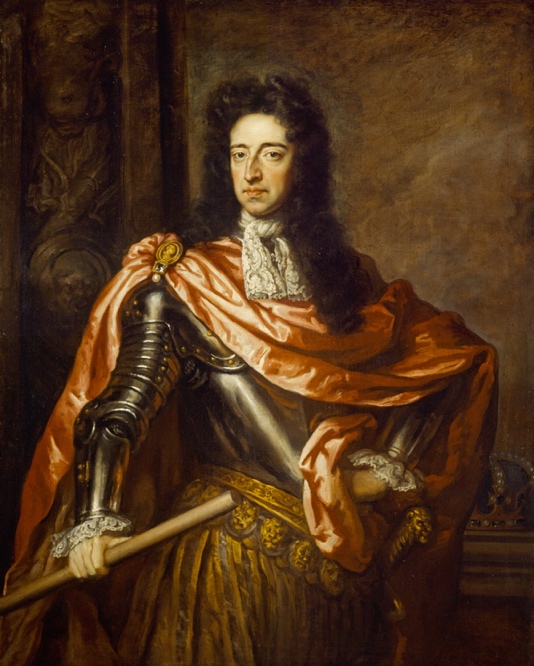
On 26 April 1679, the day the Castle was officially declared
complete, its five projecting bastions were given their
permanent names. The naming ceremony was a political
statement as much as a celebration: each bastion was named
for one of the noble titles held by William III of
Orange-Nassau, the Stadtholder of the Dutch
Republic. This is the man who would, within a decade, also
become King William III of England, Scotland, and Ireland.
Who Was William III of Orange-Nassau?
A declaration of Dutch power written into geography
William was one of the most consequential political figures
of seventeenth-century Europe. As Stadtholder of the Dutch
Republic, he was effectively its head of state and
commander-in-chief - the representative of the House
of Orange, the ruling dynasty of the Netherlands.
Naming the bastions after his titles was a political act:
this fortress, at the edge of the known world, was a
declaration of Dutch power.
Ten years after the Castle was completed, William would
cross the English Channel in the Glorious Revolution
and become King of England too. The Castle’s bastions,
already named for his titles, would find themselves part of
an empire even larger than the one they had been built to
serve.
William III of Orange-Nassau - whose noble titles still name the five bastions
How Were the Bastions Named?
An act of loyalty and a declaration of identity
Naming the bastions after William III of Orange-Nassau
titles was both an act of loyalty and a
declaration of identity: this fortress, at
the southernmost edge of the known world, was an extension
of Dutch power and
Dutch glory.
Each of William’s titles reflected a different
territory or county over which the House of Orange held
authority. Giving the Castle’s five points those five
names was a way of writing Dutch imperial identity into the
very geography of the Cape.
The Five Bastions
Position, title, significance
Bastion
Position
Title of William III
Significance
Leerdam
West
Count of Leerdam
First foundation stone laid here, 2 January 1666
Buuren
North-West
Lord of Buuren
First bastion completed (1674)
Katzenellenbogen
North-East
Count of Katzenellenbogen
Originally faced the sea; now faces the city after land reclamation
Nassau
South-East
Prince of Nassau
Provided overlapping cannon fire to defend the harbour approach
Oranje
South
Prince of Orange
The tallest bastion; guarded the inland approaches to the Cape