The Castle was never intended as merely a defensive shell. It
was designed to be entirely self-sufficient
and survive a siege of unlimited duration.
A Miniature Colonial City
All the institutions of power within a single set of walls
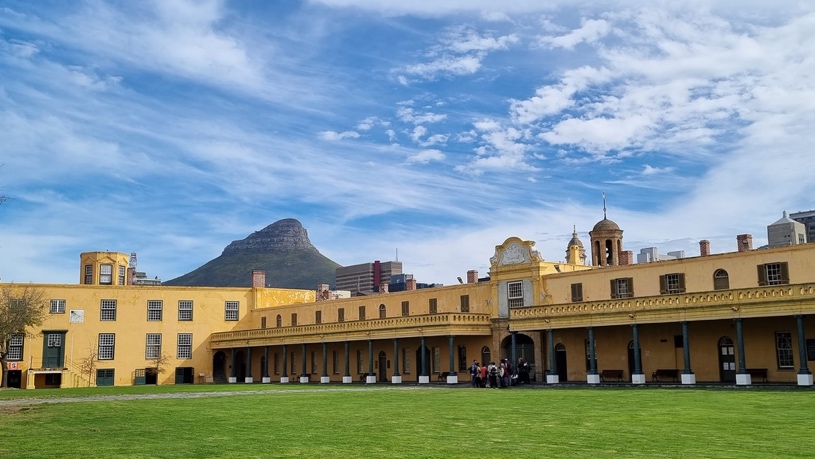
Within its walls were: a church, a
bakery (known as Het Bakhuys), a
forge, workshops, a
bell tower, storerooms, a
governor’s residence, common
soldiers’ barracks, and a formal
courtyard for civic ceremonies.
It was a miniature colonial city, complete with all the
institutions of power: judicial, religious, commercial and
military - all contained within a single set of walls.
The Bell Tower
The oldest functioning bell in South Africa
The bell tower, built in 1684, holds a 300-kilogram bronze
bell cast in Amsterdam in 1697. This is the oldest
functioning bell in South Africa, still rung today.
The De Kat Balcony
Where laws were proclaimed and sentences read
The De Kat Balcony, an elevated platform overlooking the
courtyard, was where governors made official proclamations,
announced new laws, and read out judicial sentences to the
population gathered below.
The Donker Gat
The Dark Hole beneath the courtyard
Below the courtyard’s surface lay something far darker:
the Donker Gat - the Dark Hole -
a windowless dungeon used for high-profile prisoners and
those awaiting execution.
In Cape winter, the Donker Gat flooded. Some of the people
chained inside drowned.
Why Are the Walls Yellow?
Passive solar engineering, applied in the seventeenth century
Visitors to the Castle almost always ask about the
Castle’s distinctive
ochre-yellow paint.
The answer is practical rather than
decorative. In the
African summer, thick stone walls absorb enormous amounts of
heat, turning the interior spaces into near-unbearable
ovens.
The pale yellow paint reflects rather than absorbs sunlight,
keeping the internal temperature much lower. It is passive
solar engineering, applied in the seventeenth century. A
reminder that the people who built this place were solving
real-world problems in the same way we do today, just
without the benefit of modern materials.
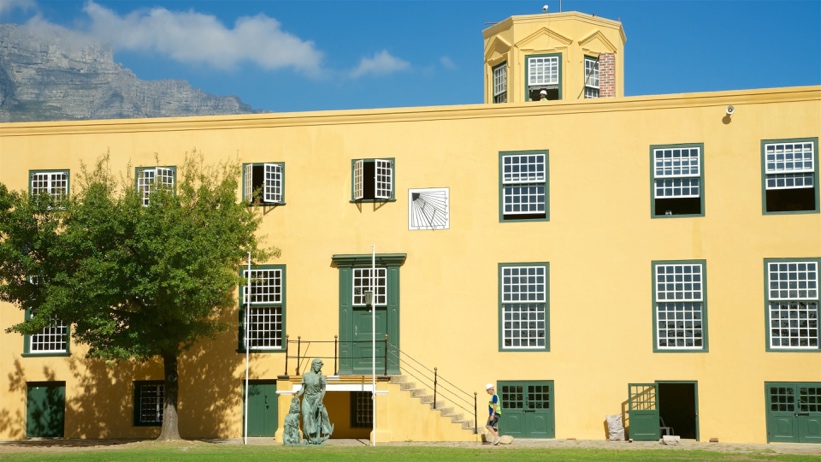
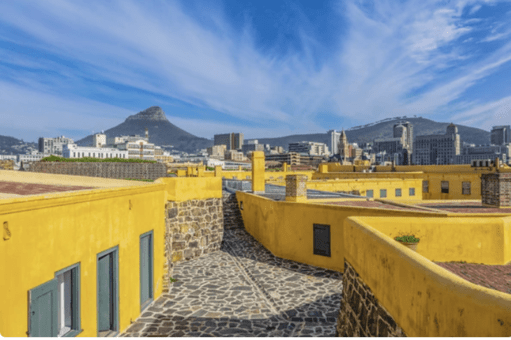
The ochre-yellow walls beneath Lion’s HeadA vertical sundial on the yellow facade - another piece of seventeenth-century engineeringLooking along the yellow ramparts towards the modern city