A Building That Has Outlasted Everything Built Around It
Stand at the corner of Darling and
Buitenkant Streets in
central Cape Town, look up at the ochre-yellow walls, and
consider this: every single thing you can see around
you - the roads, the offices, the Cape Town
railway station, the entire city sprawling towards the
mountain - none of it existed when this building was
finished.
What This Building Has Been
Six flags, three centuries, one fortress
The Castle of Good Hope has been standing since 1679. It has
watched the city grow up around it from nothing. It has flown
six different flags. It has held kings in its dungeons,
sheltered governors in its halls, trained soldiers in its
courtyards, and now - in its most remarkable
transformation - it has chosen to place statues of the
very men it once imprisoned at its very heart.
To showcase history in all its ugliness and all its glory.
Not to hide it, or whitewash it. But to learn from it. To be
transformed by it.
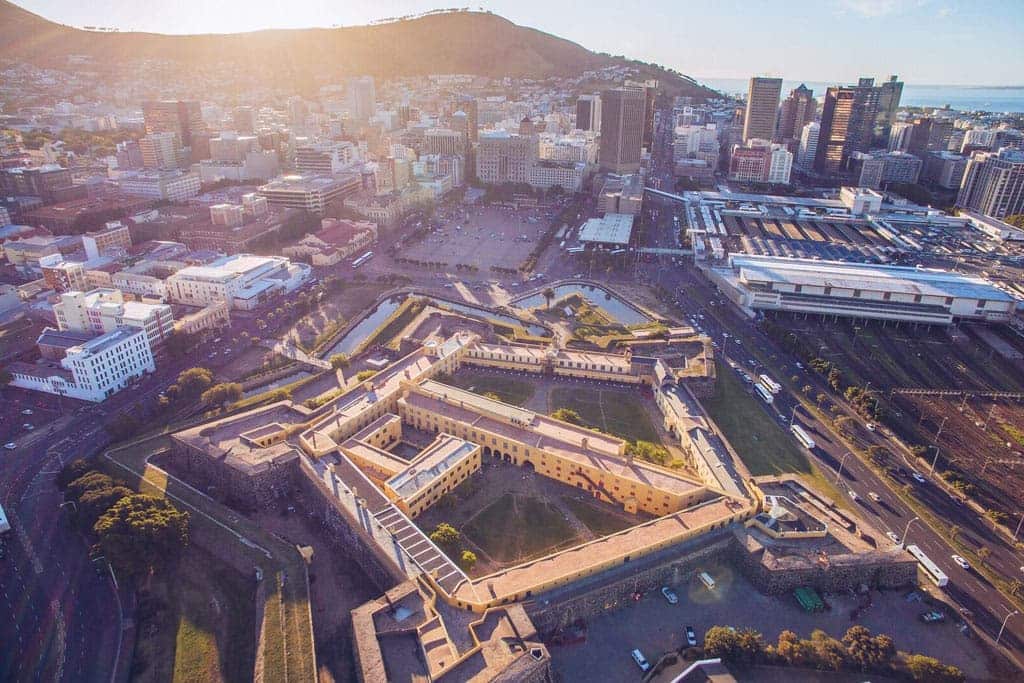
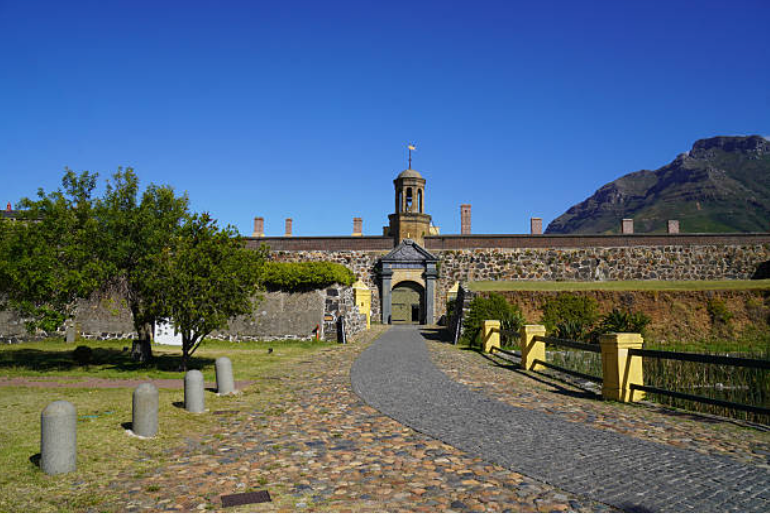
The Castle of Good Hope at the heart of modern Cape TownThe Castle’s main entrance and bell tower
Every Era Is Still Present
Layers of stone, layers of meaning
This is not just a fort. It is the oldest surviving colonial
building in South Africa, and arguably the most layered.
Layers of stone, yes, but more importantly, layers of meaning.
Every era of its history is still present in the building in
some form - from the names carved into its bastions to
the balcony from which death sentences were once announced,
now gazing down at bronze figures of resistance.
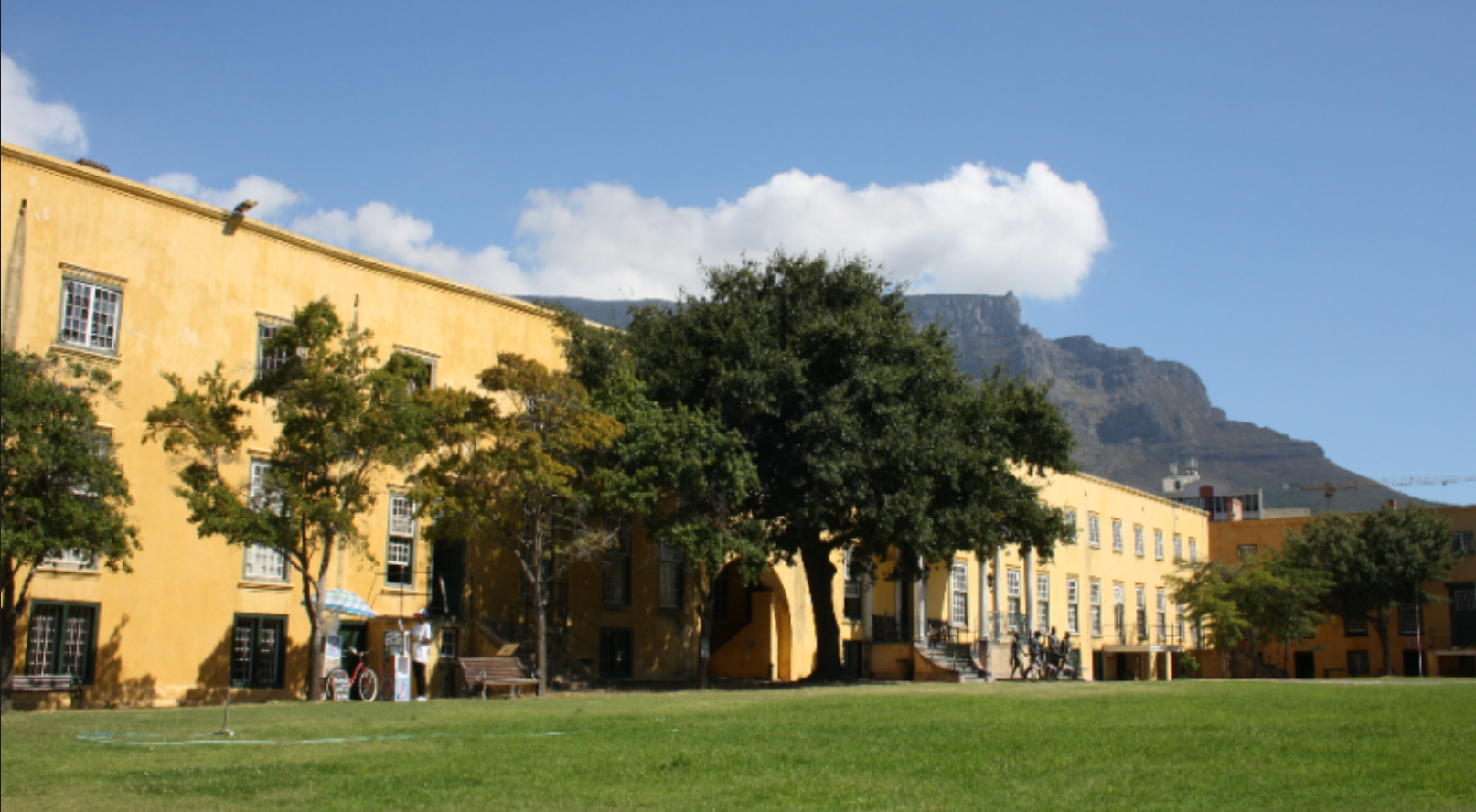
The yellow walls of the inner courtyard, against Table Mountain
A Matter of Perspective
Whose history are we telling?
The Castle holds more stories than any single visit can carry.
Every stone in the Castle means something different depending
on who is looking at it. Walk through the same gate and you
walk through a different history depending on who you are.
It’s definitely a matter of perspective coming from
South Africa’s Rainbow Nation.
“Rainbow Nation” was Desmond
Tutu’s phrase for the idea that South Africa’s
many different peoples and
histories could coexist
after apartheid - that
no single group’s story would dominate
anymore.
In the context of the Castle, it means that a
Khoekhoe memory of the building, an
Afrikaner memory, an
enslaved person’s memory, and a
British colonial memory are all considered
valid - all part of the same place. Rather than choosing
one official story, the democratic era tries to
hold all of them at once.
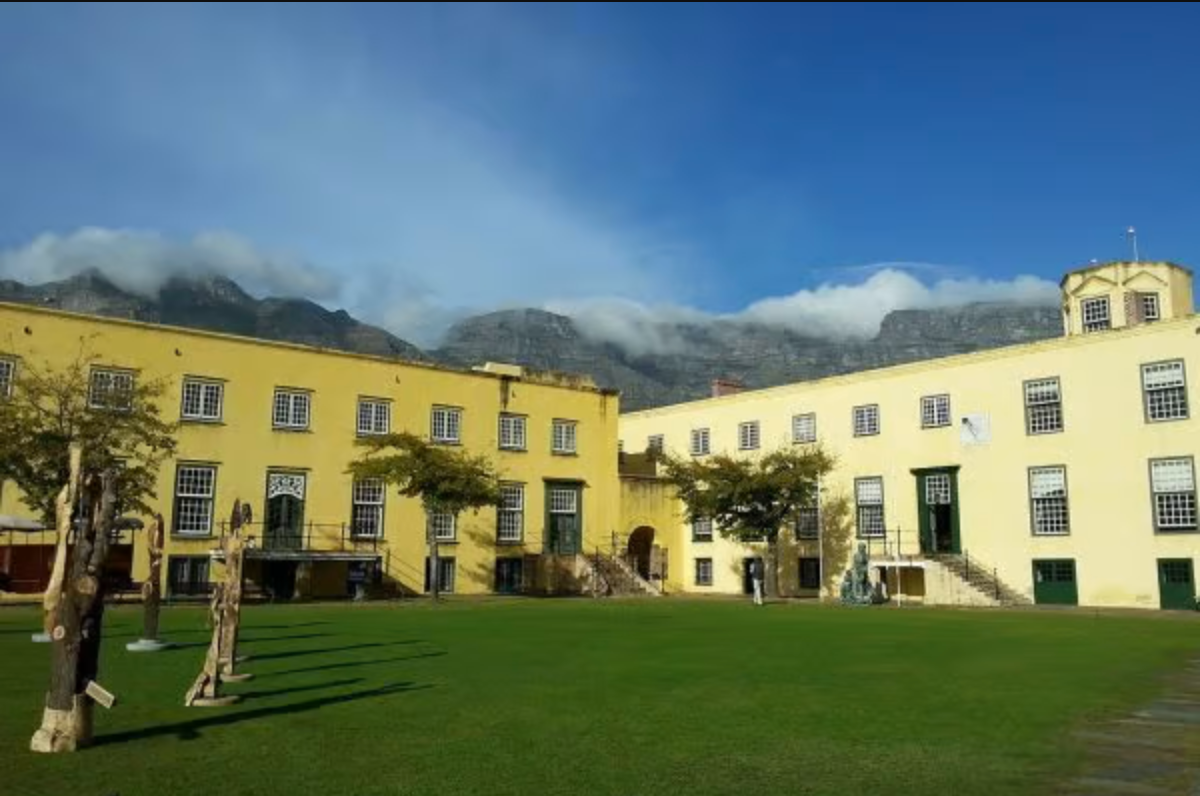
Same courtyard, different light - the Castle holds many stories at once
You Are Invited
An invitation to see Cape Town with fresh eyes
If you have ever stood in Cape Town and wondered how this city
came to be - who built it, who suffered for it, and who
is working to remake it - read on.
Come and explore three and a half centuries of history: from
a mud fort at the edge of the known world,
to a castle at the heart of a colony, to a
place now doing something rare - asking honest
questions about its own past.
This is an invitation to see Cape Town the way a historian
does - with curiosity.